


Past works are archived in chronological order and it’s being updated sequentially. Here you can view it in PDF.
edit/ design/ photos: Takahiro Tsushima


July 2025
https://theultimatespirits.jp/
July 2024
Apr. 2022
Mar. 2021
Mar. 2019

Past works are archived in chronological order and it’s being updated sequentially. Here you can view it in PDF.
edit/ design/ photos: Takahiro Tsushima
Dec. 2021 updated

My work was featured in the art section of the magazine POPEYE.
Dec. 2024
In the summer of 2024, I spent about a month in Koumi Town, Minamisaku District, Nagano Prefecture, working on a residency project.
Artist: Hinako Miyabayashi
Filming by Takahiro Tsushima
With support from: Gallery 38, KOUMI-MACHI KOGEN Museum of Art
https://www.instagram.com/koumi_air/
Aug. 2024


The interview was conducted by a German journalist, Roland Brockmann. In the winter, half a year after my move from Japan to Berlin, I was interviewed at the Udk studio. The article discusses my perspectives and changes in my work, as well as my experiences with the changing environment during the pandemic. The interview also features a short video showing the process of me creating the canvas base and completing a painting.
Mar. 2022

If you are interested in purchasing, please contact at

180 × 230 cm (180 × 100, 180 × 130)
oil on canvas and chinese paper
2023

40 × 30 cm
oil on canvas
2023

60 × 60 cm
oil on canvas, paper
2023

40 × 40 cm
oil on canvas
2023

40 × 40 cm
oil on canvas
2023

170 × 60 cm
oil on canvas
2023

60 × 45 cm
oil on canvas
2023

60 × 45 cm
oil on canvas
2023

55 × 45 cm
oil on canvas
2023

55 × 45 cm
oil on canvas
2023

55 × 45 cm
oil on canvas
2023

60 × 45 cm
oil on canvas
2023

60 × 45 cm
oil on canvas
2023

80 × 50 cm
oil on canvas
2022

80 × 50 cm
oil on canvas
2022

Photography by Takahiro Tsushima
45 × 30 cm
oil on canvas
2022

Photography by Takahiro Tsushima
45 × 30 cm
oil on canvas
2022

Photography by Takahiro Tsushima
45 × 30 cm
oil on canvas
2022

Photography by Takahiro Tsushima
33 × 24 cm
oil on canvas
2022

Photography by Takahiro Tsushima
33 × 24 cm
oil on canvas
2022

Photography by Takahiro Tsushima
33 × 24 cm
oil on canvas
2022

Photography by Takahiro Tsushima
33 × 24 cm
oil and beeswax on canvas
2022

Photography by Takahiro Tsushima
33 × 24 cm
oil on canvas
2022

Photography by Takahiro Tsushima
22.7 × 15.8 cm
oil and japanese traditional paper on canvas
2021

Photography by Takahiro Tsushima
22.7 × 15.8 cm
oil on canvas
2021

Photography by Takahiro Tsushima
22.7 × 15.8 cm
oil on canvas
2021

Photography by Takahiro Tsushima
22.7 × 15.8 cm
oil on canvas
2021

120 × 100 cm
oil on canvas
2021

Photography by Takahiro Tsushima
103.0 × 72.8 cm
oil on canvas
2021

Photography by Takahiro Tsushima
194 × 141 cm
oil on canvas
2021

Photography by Takahiro Tsushima
80.3 × 53.0 cm
oil on canvas
2021

Photography by Takahiro Tsushima
80.3 × 53.0 cm
oil on canvas
2021

Photography by Takahiro Tsushima
80.3 × 53.0 cm
oil on canvas
2021

Photography by Takahiro Tsushima
53.0 × 45.5 cm
oil on canvas
2021

Photography by Takahiro Tsushima
45.5 × 53.0 cm
oil on canvas
2021

Photography by Takahiro Tsushima
53.0 × 45.5 cm
oil on canvas
2021

Photography by Takahiro Tsushima
53.0 × 72.7 cm
oil on canvas
2021

Photography by Takahiro Tsushima
24.2 × 33.3 cm
oil on canvas
2021

Photography by Takahiro Tsushima
33.3 × 24.2 cm
oil on canvas
2021

Photography by Takahiro Tsushima
41.0 × 24.2 cm
oil on canvas
2021

Photography by Takahiro Tsushima
33.3 × 24.2 cm
oil on canvas
2021

Photography by Takahiro Tsushima
194 × 259 cm
oil on canvas
2020

Photography by Takahiro Tsushima
194 × 162 cm
oil on canvas
2020

Photography by Takahiro Tsushima
194 × 162 cm
oil on canvas
2020

Photography by Takahiro Tsushima
162.0 × 130.3 cm
oil on canvas
2020

Photography by Takahiro Tsushima
162.0 × 130.3 cm
oil on canvas
2020

Photography by Takahiro Tsushima
162.0 × 130.3 cm
oil on canvas
2020

Photography by Takahiro Tsushima
162.0 × 130.3 cm
oil on canvas
2020

Photography by Takahiro Tsushima
112 × 194 cm
oil on canvas
2020

Photography by Takahiro Tsushima
53.0 × 80.3 cm
oil on canvas
2020

Photography by Takahiro Tsushima
80.3 × 53.0 cm
oil and japanese traditional paper on canvas
2020

Photography by Takahiro Tsushima
80.3 × 53.0 cm
oil on canvas
2020

Photography by Takahiro Tsushima
65.2 × 50.0 cm
oil on canvas
2020

Photography by Takahiro Tsushima
53.0 × 45.5 cm
oil on canvas
2020

Photography by Takahiro Tsushima
53.0 × 45.5 cm
oil on canvas
2020

Photography by Takahiro Tsushima
53.0 × 45.5 cm
oil on canvas
2020

Photography by Takahiro Tsushima
162 × 112 cm
oil on interlining cloth
2019

Photography by Takahiro Tsushima
27.3 × 22.0 cm
oil and japanese traditional paper on canvas
2018

Photography by Takahiro Tsushima
22 × 22 cm
oil and japanese traditional paper on canvas
2018

Photography by Takahiro Tsushima
22 × 22 cm
oil on tracing paper
2018

Photography by Takahiro Tsushima
22.7 × 22.7 cm
oil and japanese traditional paper on canvas
2018

Photography by Takahiro Tsushima
194.0 × 130.3 cm
oil on canvas
2018

Photography by Takahiro Tsushima
194.0 × 130.3 cm
oil on canvas
2018

Photography by Takahiro Tsushima
17.8 × 12.7 cm
watercolour on yupo paper
2023

Photography by Takahiro Tsushima
17.8 × 12.7 cm
watercolour on yupo paper
2023

Photography by Takahiro Tsushima
17.8 × 12.7 cm
watercolour on yupo paper
2023
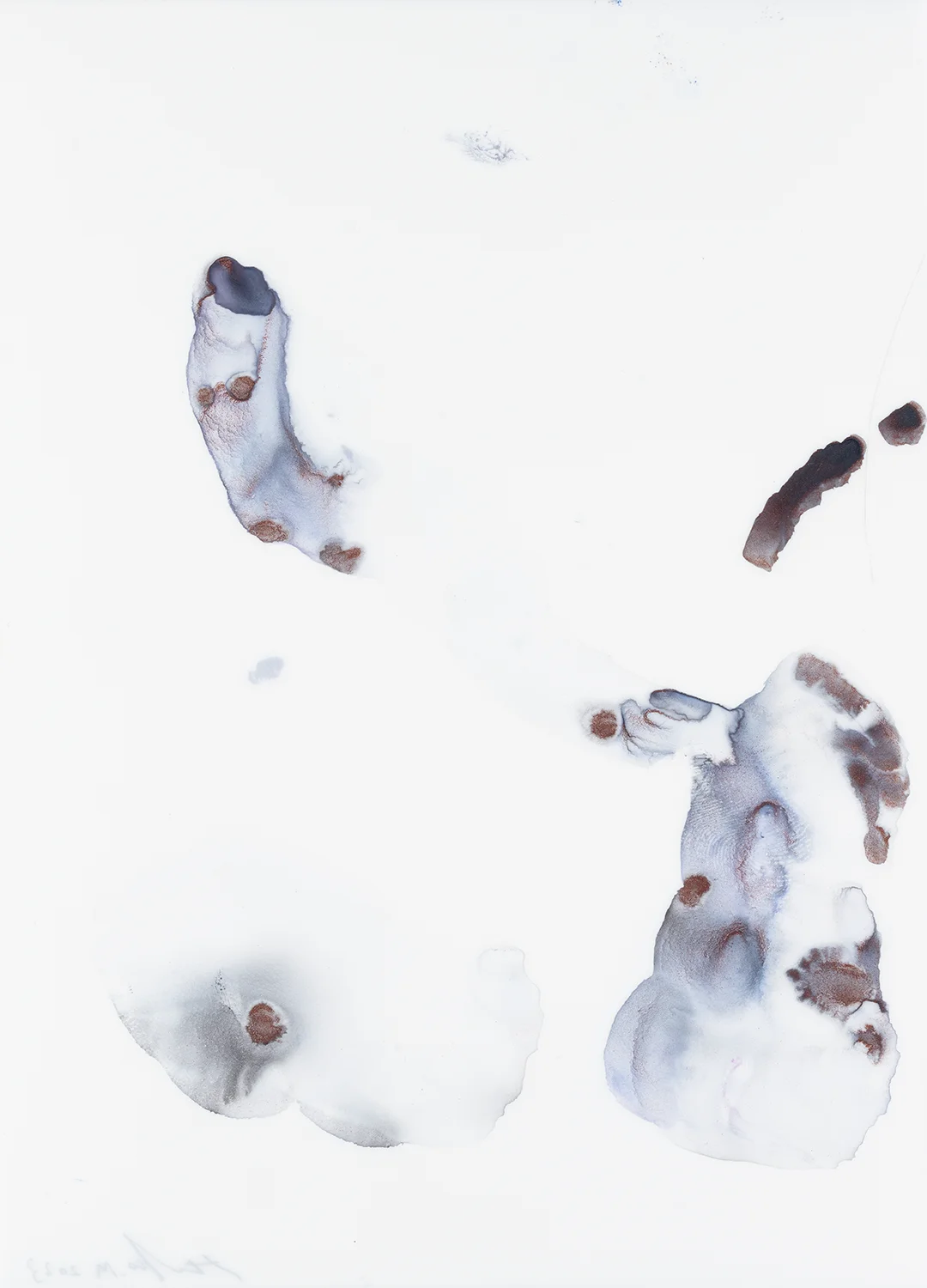
Photography by Takahiro Tsushima
17.8 × 12.8 cm
watercolour on yupo paper
2022

Photography by Takahiro Tsushima
17.8 × 12.7 cm
watercolour on yupo paper
2022

Photography by Takahiro Tsushima
17.8 × 12.7 cm
watercolour on yupo paper
2022

Photography by Takahiro Tsushima
17.8 × 12.7 cm
watercolour on yupo paper
2022

Photography by Takahiro Tsushima
17.8 × 12.7 cm
watercolour on yupo paper
2022

Photography by Takahiro Tsushima
17.8 × 12.7 cm
watercolour on yupo paper
2022

Photography by Takahiro Tsushima
17.8 × 12.7 cm
watercolour on yupo paper
2022

Photography by Takahiro Tsushima
17.8 × 12.7 cm
watercolour on yupo paper
2022

Photography by Takahiro Tsushima
17.8 × 12.7 cm
watercolour on yupo paper
2022
<<< swipe >>>

Shattered Moon Descending
落っこちて欠けた月
Photography by Takahiro Tsushima

Dance of the Banana
バナナの踊り
Photography by Takahiro Tsushima

The Art of Ignorance
知らんぷり
Photography by Takahiro Tsushima

The Dance
踊り
Photography by Takahiro Tsushima

Unseen Footprints
裏の足跡
Photography by Takahiro Tsushima

December's Necklace
師走の首飾り
Photography by Takahiro Tsushima

Song of the Triplet
みつごの唄よ
Photography by Takahiro Tsushima

Waffle Daddy
ワッフルパパ
Photography by Takahiro Tsushima

The Vegetable House
野菜の家
Photography by Takahiro Tsushima

The Wayward Camellia
はずれた椿
Photography by Takahiro Tsushima
29.7 × 21.0 cm
paper pasted on coloured paper
2022
<<< swipe >>>

Tranquil Bamboo
静かな竹
Photography by Takahiro Tsushima

Time That Connects
繋ぐ時間
Photography by Takahiro Tsushima

Song of Children
こどもの唄
Photography by Takahiro Tsushima

The Cherry Blossom Park of Fifth Graders
5年生のさくらんぼ公園
Photography by Takahiro Tsushima

The Habit of Frogs
カエルの癖
Photography by Takahiro Tsushima

Rosy Light
桃色のひかり
Photography by Takahiro Tsushima

Trembling May
揺れた5月
Photography by Takahiro Tsushima

Candy Exchange
飴交換
Photography by Takahiro Tsushima

Pearl of the Cow
牛の真珠
Photography by Takahiro Tsushima

Believing in Rice
お米を信じる
Photography by Takahiro Tsushima
29.7 × 21.0 cm
paper pasted on coloured paper
2022
<<< swipe >>>

Like Juggling Bean Bags
お手玉のように
Photography by Takahiro Tsushima

Elephant's Slide
象の滑り台
Photography by Takahiro Tsushima

Heavy Hoop
重たいわっこ
Photography by Takahiro Tsushima

Vase of the Night
夜の花瓶
Photography by Takahiro Tsushima

Dragonfly Wings
とんぼの羽
Photography by Takahiro Tsushima

The Fisherman's Feelings
釣り人の気持ち
Photography by Takahiro Tsushima

Star Festival Wishes II
七夕の願い
Photography by Takahiro Tsushima

Pair of Blues
対の青
Photography by Takahiro Tsushima

Purple Spore
ムラサキホウシ
Photography by Takahiro Tsushima

Twirling Cabinet
くるくる箪笥
Photography by Takahiro Tsushima

September's Masquerade
9月の舞踏会
Photography by Takahiro Tsushima
29.7 × 21.0 cm
paper pasted on coloured paper
2022
<<< swipe >>>

Shy Tulips
はにかみチューリップ
Photography by Takahiro Tsushima

A Chance Meeting
あわせるように
Photography by Takahiro Tsushima

Where the Hidden Voices Are
隠された声のありか
Photography by Takahiro Tsushima

A Dance Spun by the Rain
雨が紡いだ踊り
Photography by Takahiro Tsushima

Necklace
首飾り
Photography by Takahiro Tsushima

Butterfly Posts
蝶しるべ
Photography by Takahiro Tsushima

Catch Between Spring and Summer
春と夏のあいだに
Photography by Takahiro Tsushima

Transparent Butterfly
透明な蝶
Photography by Takahiro Tsushima

Fruit Ornament
果実のオーナメント
Photography by Takahiro Tsushima

Journey to the Tree
ツリーへのゴール
Photography by Takahiro Tsushima

Beyond What You Heard
聞こえたさきに
Photography by Takahiro Tsushima

From Needle to Branch, Leaf Stabbed by the Wind
枝になる針、風にさす葉
Photography by Takahiro Tsushima
33.3 × 24.2 cm | 32.2 × 24.2 cm
watercolour on paper
2021
<<< swipe >>>

Autumn in the Spring
春の中の秋
Photography by Takahiro Tsushima

The Letter
Photography by Takahiro Tsushima

The Last Greetings
さいごのあいさつ
Photography by Takahiro Tsushima

Nuts Born on Yarn
糸から生まれる実
Photography by Takahiro Tsushima

Silkworm and Ladybird
ミノムシ・タマムシ
Photography by Takahiro Tsushima
32.2 × 24.2 cm | 24.2 × 32.2 cm
watercolour on paper
2021
<<< swipe >>>

Relying on a Letter
便りを頼りに
Photography by Takahiro Tsushima

Traces of Flowers
ハナノアト
Photography by Takahiro Tsushima

Standing Spoon
スタンディングスプーン
Photography by Takahiro Tsushima

Stick Cotton Swabs
スティックメンボウ
Photography by Takahiro Tsushima

Flying Seed Hat
飛んだ種帽子
Photography by Takahiro Tsushima
33.3 × 24.2 cm
watercolour on paper
2021
<<< swipe >>>

Chestnut-Like Mother
栗のような母
Photography by Takahiro Tsushima

Light Running Along Hairlines
毛筋を走るひかり
Photography by Takahiro Tsushima

Three girls Three styles
Photography by Takahiro Tsushima

Roots
Photography by Takahiro Tsushima

Falling Away
落っこちる
Photography by Takahiro Tsushima

Behind the Stage of the Wig
カツラの裏舞台
Photography by Takahiro Tsushima

Mirror Morning Time
Photography by Takahiro Tsushima

Rushing Ahead
先を急ぐ
Photography by Takahiro Tsushima

Madonna
Photography by Takahiro Tsushima

Room No.5 in Poland
ポーランドの5号室
Photography by Takahiro Tsushima

Grandmother at 3pm
午後3時の祖母
Photography by Takahiro Tsushima

Whirlwind with That Child
あの子とつむじ風
Photography by Takahiro Tsushima

Before My Eyes, the Breeze in Hayama
目の前は、葉山の風
Photography by Takahiro Tsushima

Hand in Hand
てとりあしとり
Photography by Takahiro Tsushima

Dear you
Photography by Takahiro Tsushima

Memories of Poland
ポーランドの記憶
Photography by Takahiro Tsushima
33.3 × 24.2 cm
drawing on croquis paper
2020
<<< swipe >>>

After Running
走ってから
Photography by Takahiro Tsushima

Starting Line
ハジマリ
Photography by Takahiro Tsushima

Forward Roll
でんぐり返し
Photography by Takahiro Tsushima

Jar of Seaweed
海苔の壺
Photography by Takahiro Tsushima

Jar Sign
つぼの目印
Photography by Takahiro Tsushima

Burnt Ice Cream
焦げたアイス
Photography by Takahiro Tsushima

Star Festival Wishes
七夕の願い
Photography by Takahiro Tsushima

Swing of Bagworm
ミノムシのブランコ
Photography by Takahiro Tsushima

Mark of Mandarin Orange Field
みかん畑の目印
Photography by Takahiro Tsushima

Corn Stamp
とうもろこしのハンコ
Photography by Takahiro Tsushima

Crocodile Mirror
ワニの鏡
Photography by Takahiro Tsushima
28 × 21 cm
watercolour on paper
2020
<<< swipe >>>

Factor Strawberry
因数苺
Photography by Takahiro Tsushima

Dancing Tambourine
踊る太鼓
Photography by Takahiro Tsushima

Ski Mountain
スキー場
Photography by Takahiro Tsushima

Bitter Gourd Snowfall
ゴーヤの雪降り
Photography by Takahiro Tsushima

Sneezing of Sprouts
芽のくしゃみ
Photography by Takahiro Tsushima

Plants of Uncle
おじさまの植物
Photography by Takahiro Tsushima

Send a Bouquet
花束を贈る
Photography by Takahiro Tsushima

Stretch (6)
ストレッチ
Photography by Takahiro Tsushima

Spring Body Hit
春の体当たり
Photography by Takahiro Tsushima

Deer Outside the Window
窓の外の鹿
Photography by Takahiro Tsushima

Rainy Day
雨の日
Photography by Takahiro Tsushima
29.7 × 21.0 cm | 21.0 × 29.7 cm | 26.7 × 19.4 cm
watercolour on paper
2020

Photography by Takahiro Tsushima
29.7 × 21.0 cm
watercolour on paper
2019

Photography by Takahiro Tsushima
33.3 × 24.2 cm
watercolour on paper
2019

Photography by Takahiro Tsushima
33.3 × 24.2 cm
watercolour on paper
2019
<<< swipe >>>

Photography by Takahiro Tsushima

Photography by Takahiro Tsushima

Photography by Takahiro Tsushima

Photography by Takahiro Tsushima

Photography by Takahiro Tsushima

Photography by Takahiro Tsushima

Photography by Takahiro Tsushima

Photography by Takahiro Tsushima

Photography by Takahiro Tsushima

Photography by Takahiro Tsushima

Photography by Takahiro Tsushima

Photography by Takahiro Tsushima
I simultaneously held my first solo exhibition in Japan alongside Project N 93.
Miyabayashi expresses a desire to "paint the wind," which can be seen as representing fleeting moments. She captures the scenes and sensations of the faint moments perceived by her own perception, taking them in like the palm of her hand and expressing those feelings on a flat surface.
Through three winters in Berlin, with its gray skies and moderate humidity, the layers and membranes of that air have undoubtedly influenced the tone of her expression. She has sharpened her ability to focus on "what can be seen here and now," and have acquired the power to create paintings that are quiet yet eloquent, while using fewer colors and strokes.
Gallery38, Tokyo.
Fri., 19 Jan. - Sun., 25 Feb. 2024
<<< swipe >>>

Photography by Takahiro Tsushima

Photography by Takahiro Tsushima

Photography by Takahiro Tsushima

Photography by Takahiro Tsushima

Chasing the Belated Window #2,#3,#1
遅れた窓を追う
Photography by Takahiro Tsushima

Photography by Takahiro Tsushima

Photography by Takahiro Tsushima

Photography by Takahiro Tsushima

Gathering Snow's Skin
雪の皮膚をすくう
Photography by Takahiro Tsushima

Photography by Takahiro Tsushima

Photography by Takahiro Tsushima

Tempelhof's Melodic Hum
テンペルホフの鼻歌
Photography by Takahiro Tsushima

Unfallen Whispers
落ち葉にならず
Photography by Takahiro Tsushima

Photography by Takahiro Tsushima

Photography by Takahiro Tsushima

Photography by Takahiro Tsushima
Miyabayashi’s pictorial expression is highly abstract, yet it does not seem to fit neatly within the category of abstract painting. While her surfaces are abstract, they are not what is typically called “pure abstraction”; rather, at their foundation lies a kind of lucid realism. Light and wind, the flow of space and time—these elements are always perceptible within her paintings.
After all, painters create because a “world” exists. Even abstract art, once severed from that connection, can only drift into an anemic dead end. Whether realism or idealism, without some form of approach to the “world” at the root of creation, painting will always face crisis. In Miyabayashi’s case, what lies beneath is realism. She distances herself from any approach that spiritualizes nature into a transcendent entity. Instead, beginning from a continuum with the everyday, she sharpens her five senses, embraces the fact that she herself is part of nature, and seeks to perceive the various aspects of nature and things.
Miyabayashi once described her intention as “to grasp the time and atmosphere that things carry in a multifaceted way, and through that standpoint, unsettle the viewer’s perception.” She has spoken of an experience central to this intention:
“When I watch the snow falling continuously and quietly, I sense the many layers that exist in this world. The sight of snow falling into the far-off distance, almost disappearing, felt similar to the space I wanted to paint.”[*1]
Later she elaborated: “There seemed to be neither a beginning nor an end, and each snowflake appeared to mark its own distinct time.”[*2]
For Miyabayashi, the act of painting is nothing less than an attempt—through careful and tension-filled dialogue with the surface—to probe the nature of those unexpected, sudden moments when she encounters “a phenomenon occurring before my eyes” and feels a jolt of recognition[*3]. She then gradually releases that sensation into clarity, attempting “to generate within the picture a sense of new time.”[*4]
What is crucial here is that the “layers” of which she speaks are not merely spatial; they are apprehended simultaneously under the aspects of time and movement. Her statement, “I understand oil painting as the act of seeing layers,”[*5] must be read in this sense.
It is therefore natural that her visual language differs fundamentally from the kind of contemporary images that resemble the schematic, fixed, software-like “layers” familiar from graphic programs. The elements in Miyabayashi’s paintings are not subsumed into preexisting, planar, static layers. Each lives its own layer of motion and time—perhaps no longer “layers” in the conventional sense—animating the pictorial space.
For Miyabayashi, layers are nothing other than qualitative differences and dynamic interrelations among space, time, and movement. They are the very “layers” that constitute the “world.”
When we consider Miyabayashi’s practice more broadly, it is striking that she is not concerned solely with visual elements such as color and form. Rather, she keenly sharpens her tactile, epidermal, and somatic senses toward the space and air of a place, its humidity and temperature, the textures of things, even their atmospheres.
For example, when she faces a large canvas, she is acutely aware of the space between herself and the surface; as she moves, that space and the painting together move and transform, causing her brushstrokes to naturally curve. Her gestures, then, are not a predetermined action imposed upon a flat plane; they are closer to a movement that seeks to feel out the surrounding space. The deeply spatial lines unique to Miyabayashi arise from this engagement.
Turning to her technique, we find a strong attentiveness to the support and its materiality. She avoids commercially prepared canvases coated in white gesso, instead creating her own grounds using natural materials such as animal glue. She favors raw linen or jute with their earthy hues, selecting them with close attention to fineness, coarseness, and irregularity. She layers various fabrics and washi onto the surface, thus stratifying the support itself. She meets the unexpected variations that arise from the physical contact between the brush and these diverse textures—hard, soft, rough, smooth—with fresh sensitivity.
For Miyabayashi, the support is not only the “place of painting” but an active participant with expressive agency. Unsurprisingly, this approach grows out of her distinctly tactile sensibility.
Her insistence on these supports originates partly in her awareness that the “whiteness” of ready-made canvases accepts her “expression” too readily—such that the work proceeds solely through the artist’s dominance. She recognized a certain “arrogance” in this and felt the need to counterbalance it through the “reception of externality.” This insight reflects her desire to discover a new “necessity” for expression through the tension between expression and its outside[*6].
Miyabayashi’s practice does not conclude within the limits of the pictorial surface. She carefully considers the elements and relationships surrounding herself and the act of expression. Without allowing her sensibility to tilt toward any one side, she distributes it across these intermediate realms with a finely tuned equilibrium and an intentional embrace of tension—unearthing, within them, a rich vein of possibilities.
Osamu Fukushi
[Note 1] Hinako Miyabayashi, “(Afterword),” Hinako Miyabayashi Portfolio, privately published, 2021, p. 160. PDF
[Note 2] Hinako Miyabayashi, “(Statement for the solo exhibition at Galerie Bernd Kugler),” September 2023. https://www.berndkugler.at/exhibitions/2023/hinako-miyabayashi/
[Note 3] Ibid.
[Note 4] Miyabayashi, op. cit. (Note 1), p. 160. Emphasis in original.
[Note 5] Hinako Miyabayashi, “Production,” unpublished manuscript, January 2023.
[Note 6] The content of this paragraph is based on conversations and email exchanges between the author and Miyabayashi from October 2022 to December 2023, as well as unpublished materials provided by the artist.
text
Running in parallel with ‘Letter-tails Lost in Soil’, this became my first solo exhibition in Japan.
The exhibition was part of a program launched in 1999 by the Tokyo Opera City Art Gallery — an institution operated by the Tokyo Opera City Cultural Foundation — dedicated to introducing emerging painters.
Funded by the Cultural Contributor’s Pension of the late artist Tatsuoki Nambata, a key figure associated with the Terada Collection, the program continues in accordance with his wishes.
Curator: Osamu Fukushi
https://www.operacity.jp/en/ag/exh/detail.php?id=297
Tokyo Opera City Art Gallery, Tokyo.
Wed., 17 Jan. - Sun., 24 Mar. 2024
<<< swipe >>>


It is clear from Miyabayashi's words that she seeks to connect with the surroundings and objects she contemplates, expressing the subtle sensory nuances from deep within herself. This careful and intimate poetry of hers is also evident in her work titles, and her words and images seem inextricably linked. However, the core of her art is not concerned with poems, but with the impressive transformation of that lyrical sensation into painting. For her, what remains undescribed is painting.
The ancient Roman poet Horace is credited with the saying, "A poem is like a painting (Ut pictura poesis)." In China, on the other hand, there is an old proverb that states: "A poem is a painting with a voice, a painting is a poem without a voice."
In "Laokoon" (1766), Gotthold Lessing distinguished visual art from literature, drawing a clear line between poetry and painting. Clement Greenberg deepened this differentiation, focusing on material-specific form and establishing formalism as the theoretical foundation of modern art. In his writings, he also commented on Eastern art.
"Actually, not one of the original "abstract expressionists" -least of all Kline- has felt more than a cursory interest in Oriental art. The sources of their art lie entirely in the West; what resemblances to Oriental modes may be found in it are an effect of convergence at the most, and of accident at the least." ("American-Type" Painting / Clement Greenberg, 1955).
Maybe that's the way it is. Does Asian art not fit the "form" he established?
In China, in ancient times, the art of writing was as highly regarded as poetry and painting. The cornerstones of fine arts are "writing and painting", true to the idea of "the symbiosis of poem, writing and painting". This notion is based on the idea that poems and painting are inextricably linked. In their origins, writing and painting used the same brush, ink, and paper, and came from a shared source. It was not uncommon for paintings to include poetry. The distinct aesthetic sensibility for Chinese poems, writing and painting arrived in Japan alongside profound Buddhist thought.
Handwriting is poetry and visual art at the same time. In the most fundamental sense, there is no demarcation between the two. They represent meaning, matter, physicality, shape, sound, fragment, abstraction, relationships, vacancy, and they are borderless. Thus, writing is in a perpetual state of form-finding, since it cannot yet be reduced to a primordial form. This is also the case with Miyabayashi's painting.
The writing system "Hiragana" preferred by Miyabayashi was created in the 9th century by simplifying the Kanji which originated in China (Chinese script) and is only used in Japan. Hiragana (feminine handwriting), in contrast to the formal Kanji (masculine script), was used mainly in private letters and notes. Many kanji originated as ideograms, with each kanji having its own meaning. Hiragana, on the other hand, are a reduction, distortion, or fragment of kanji that represents only its sound and has no independent meaning. It is a sound that is created from the form.
Amidst the continuously falling snow, Miyabayashi recognizes the multi-faceted nature of the world. She senses fragments of many different eras, although right now the snow is filling the field of vision and transforming the world into a uniform white.
Miyabayashi's artwork is not focused on form, not on materiality or even action. It is not about depictions, meanings, appearances, representations, symbols, signs, or immersion. It is about "presence." It is an emotional ambush. It is more connected with "approach" than with a reality. It is made up of subtle elements that overlap and line up like sounds, tactile sensations, echoes, and light reflections.
It is the perception of the present. The little something that is transforming just before our eyes assails us. In that moment when we approach the world, we come into contact with the perception that is in front of us. In this sense, Miyabayashi's paintings are, beyond specific boundaries, open to all.
text
My very first solo exhibition was presented in Innsbruck, Austria.
As I watched the steadily falling snow from my parents' house in Sapporo, I realized that the world is multi-faceted. The sight of the snow falling so far that it threatened to disappear from view gave me the stimulus for the picture I wanted to paint. There seemed to be neither a beginning nor an end, and yet each snowflake seemed to have its own unique time.
Words on paper, poems in hiragana, undecipherable characters in ancient Japanese paintings: No longer words, but landscapes.
Snow covers the park, splashes of color from the playground equipment are gleaming. Above me branches swaying in the wind. Buds, children's laughter, cars passing by, the gray sky, the color of the leaves, three trash cans.––They all pause, as if they were letters. A blue time. The branch that slips into my field of vision disappears from the landscape after one step.
That I am being drawn by the material, I perceive as a natural phenomenon.––To express or to cause this only by my own will and manual dexterity seems arrogant to me. Rather, it is the natural, incidental moment of wonder when I come across these momentary phenomena that constitutes the drawing.
https://www.berndkugler.at/exhibitions/2023/hinako-miyabayashi/
Galerie Bernd Kugler, Innsbruck.
Thu., 14 Sep. - Fri., 3 Nov. 2023
<<< swipe >>>


I was awarded the Meisterschüler distinction upon completing my studies at UdK Berlin, presented through my graduation exhibition.
https://www.udk-berlin.de/en/rundgang/translate-to-english-2023/
Universität der Künste Berlin, Berlin.
Fri., 21 July - Sun., 23 July 2023
<<< swipe >>>

Photography by Takahiro Tsushima

Branches Moved to Shake the Air
枝をずらす
Photography by Takahiro Tsushima

Photography by Takahiro Tsushima

Photography by Takahiro Tsushima

Photography by Takahiro Tsushima
This is a joint project by Comité Colbert and Tokyo University of the Arts to nurture the culture and artists of the future. This year marked the third and final edition of this award. Students of Tokyo University of the Arts created works under the theme "The beauty of imperfection. Twelve works were selected in the preliminary screening and presented at the University Art Museum to determine the Awards.
https://museum.geidai.ac.jp/en/exhibit/2022/10/CCA2022.html
The University Art Museum, Tokyo University of the Arts.
Sat., 15 Oct. - Sun., 30 Oct. 2022
<<< swipe >>>

Photography by Takahiro Tsushima

Photography by Takahiro Tsushima

Photography by Takahiro Tsushima

Photography by Takahiro Tsushima

Photography by Takahiro Tsushima
This show is a graduation exhibition of Tama Art University. My work was based on the subject of 'hair', and I developed oil paintings and drawings while observing the shifting small movements of the world.
https://www.tamabi.ac.jp/pro/g_works/2021/op/s19/
Tama Art University Iio Gallery, Hachioji, Tokyo.
Thu., 13 Jan. - Sun., 16 Jan. 2021
<<< swipe >>>

A Journal of the Day
その日の日記
Photography by Takahiro Tsushima

A Journal of the Day
その日の日記
Photography by Takahiro Tsushima

A Walk Inside Autumn
秋のなかを歩って、
Photography by Takahiro Tsushima

A Walk Inside Autumn
秋のなかを歩って、
Photography by Takahiro Tsushima

A Walk Inside Autumn
秋のなかを歩って、
Photography by Takahiro Tsushima
The TAMABI select exhibition is one of the projects of the Department of Fine Arts at Tama Art University, and this is the fourth time. Tama Art University has students studying various fields related to art and fine arts, ranging from painting, sculpture, design, theatre and dance to curation, and the university is a rare environment in which all these people can meet together. This exhibition aims to actively research the exchanges and thoughts that arise in such an environment, and to explore new ways of creating artworks and exhibitions by stimulating both the students who create the artworks and those who organise the exhibitions.
https://www.tamabi.ac.jp/geigaku/tamabiselect4/
Tama Art University Art-Theque, Hachioji, Tokyo.
Mon., 11 Dec. - Sat., 16 Dec. 2017
<<< swipe >>>

Photography by Takahiro Tsushima

Photography by Takahiro Tsushima

Photography by Takahiro Tsushima

Photography by Takahiro Tsushima

Photography by Takahiro Tsushima

Photography by Takahiro Tsushima

Photography by Takahiro Tsushima

Photography by Takahiro Tsushima

Photography by Takahiro Tsushima

Photography by Takahiro Tsushima
My artwork has been featured on the new CD album by the Yoko Suzuki Trio, led by jazz pianist Yoko Suzuki.
Piano, Composer, Producer: Yoko Suzuki
Double Bass: Yuta Omino
Drums: Hiroki Kitazawa
All songs composed by Yoko Suzuki
Recorded at TAGO STUDIO TAKASAKI on Aug. 23rd, 2024
Recording, Mixing, Mastering Engineer: Shinya Matsushita
Assistant Engineer: Kana Tokita
Concert Technician from FAZIOLI: Fekete Attila
Artworks: Hinako Miyabayashi
Design: Takahiro Tsushima
Photography: Christ Gao
Hair&Makeup: Shirley
Liner Notes: Mitsuo Naianishi
Jury 2025
<<< swipe >>>

Photography by Takahiro Tsushima

Photography by Takahiro Tsushima

Photography by Takahiro Tsushima
It was selected for the label of the 6th installment of ‘Art Session Contemporary’, a series released by the Japanese bottler RUDDER LTD.
Hogshead
Distillation year: 2009
Aging: 14
Volume: 700
ABV: 49.9
Region: Islay
https://theultimatespirits.jp/
July 2024
<<< swipe >>>


Observing ‘Tokyo’ from the perspective of ‘I’.
This book was jointly produced under the guidance of Professor Takenori Miyamoto by graduate students in oil painting at Tokyo University of the Arts. Each of them conducted research and writing on Tokyo during the COVID-19 pandemic. As for myself, I created monochrome drawings and wrote a few words about the differences in scenery and overlapping memories I observed while wandering between Tokyo and Berlin in 2021.
Writers: Graduate students of Tokyo University of the Arts, etc. (Riki Akahoshi, Fumio Ohashi, Kanon Kawakubo, Ado Kawakubo, Akari Tsuji, Chu Liangwen, Yui Nagashima, Rikuo Miyama, Hinako Miyabayashi, Ryohei Yoshihara) Yoshiyuki Morioka, Takenori Miyamoto
Responsible editor: Takenori Miyamoto
Design: Shunsuke Umeki
Assisted by: Tokyo University of the Arts, Department of Painting, Oil Painting, Moriokashoten
Apr. 2022
<<< swipe >>>


Photography by Takahiro Tsushima

Photography by Takahiro Tsushima

Photography by Takahiro Tsushima

Photography by Takahiro Tsushima

Photography by Takahiro Tsushima

Photography by Takahiro Tsushima

Photography by Takahiro Tsushima

Photography by Takahiro Tsushima

Photography by Takahiro Tsushima

Photography by Takahiro Tsushima

Photography by Takahiro Tsushima

Photography by Takahiro Tsushima
Collective Music Laboratory, Okujou Beat Berlin. I newly drawn for their sound.
Graphic design: Philip Marcel Schmidt
Mar. 2021
<<< swipe >>>

Photography by Takahiro Tsushima


A concept book about boundaries, produced as part of a border project started at Dlofre’s Campus in Hamamatsu, Japan. Sosei Sato has compiled them into a book with his words.
Planned and published by Miyakoda Kensetsu
Text: Sosei Sato
Translation: Gillette, Simon Mayuko
Publication: Hadashi Books
Printed by: Sinano Printing Co.
Mar. 2019


